
Yogyakarta
On this page
Yogyakarta, usually called Jogja, is the cultural heart of Java. It is a living royal city, still home to a sultan, and it sits within reach of two of Southeast Asia's great monuments, Borobudur and Prambanan. Jogja is also a student city, with art, music, batik workshops, street food and a relaxed pace that visitors tend to love.
Visitors expecting only a two-temple day trip are often surprised by how much the city itself offers: a living palace, working craft neighborhoods and a street food scene that rewards lingering well beyond the main sights.
At a glance
- Best for: temples, Javanese culture, crafts and food.
- How long: three days is a comfortable plan.
- Getting around: ride-hailing, taxis, becak (pedal cabs), buses and walking in the center.
- Seasons: the dry season is best for temple visits and volcano views.
- Good to know: sunrise at Borobudur needs early starts and booking.
City layout
The center lies around the Kraton (sultan's palace) and the Malioboro shopping street, which runs to the main railway station. Tamansari (the water castle) is near the palace. The city extends north toward Mount Merapi and the university area. Borobudur is about an hour northwest, and Prambanan lies about 30 minutes east.
The Kraton and Malioboro area is comfortably walkable, while Borobudur and Prambanan each need a dedicated half-day trip in opposite directions, so it rarely makes sense to try to combine them on the same day.
Highlights worth your time
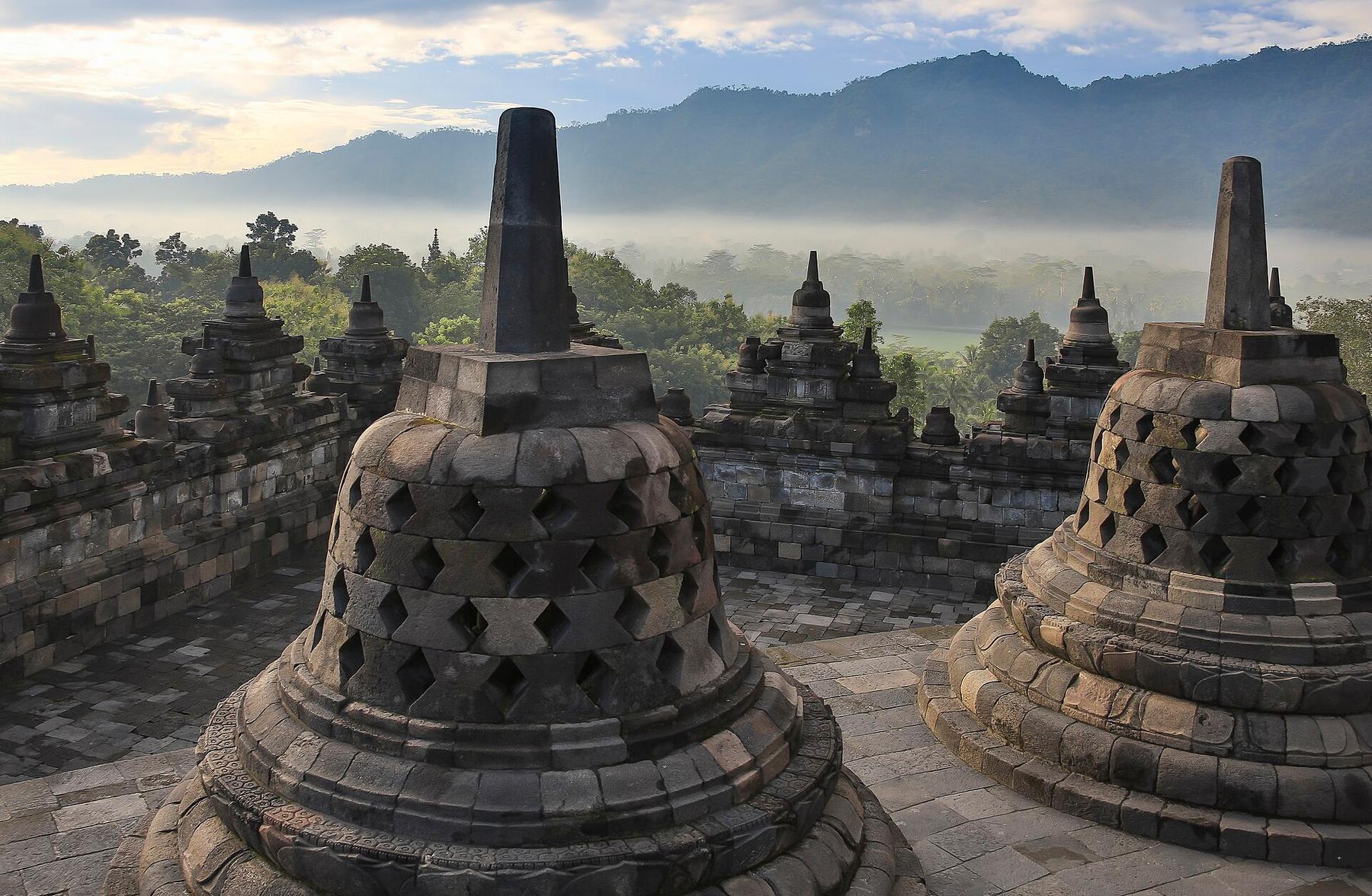
Borobudur. The world's largest Buddhist temple, a stepped stone monument with carved reliefs. Visit early, and check current rules on climbing and ticketing.
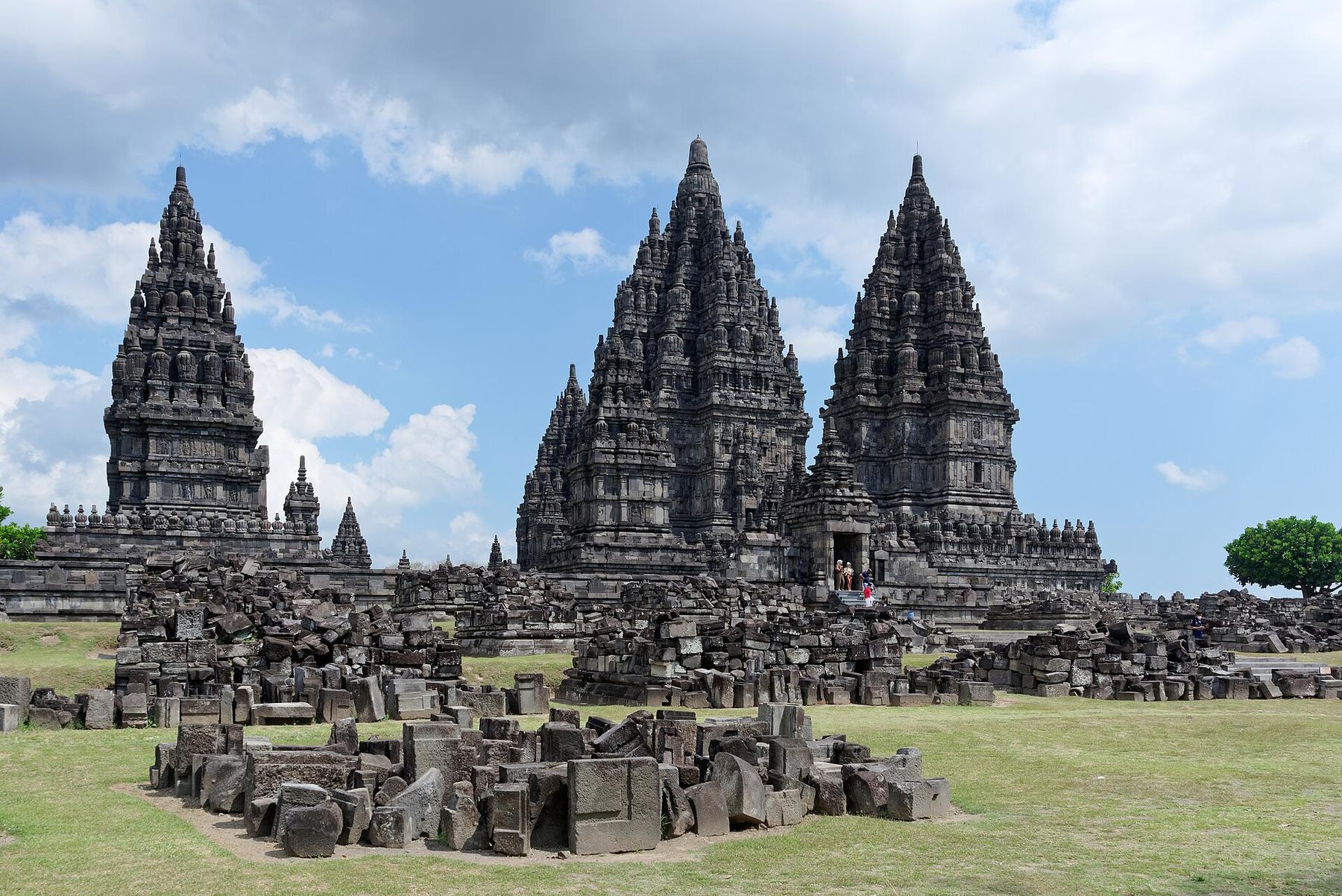
Prambanan. A large Hindu temple complex with tall spires. Visit in the late afternoon, and check for evening dance performances.
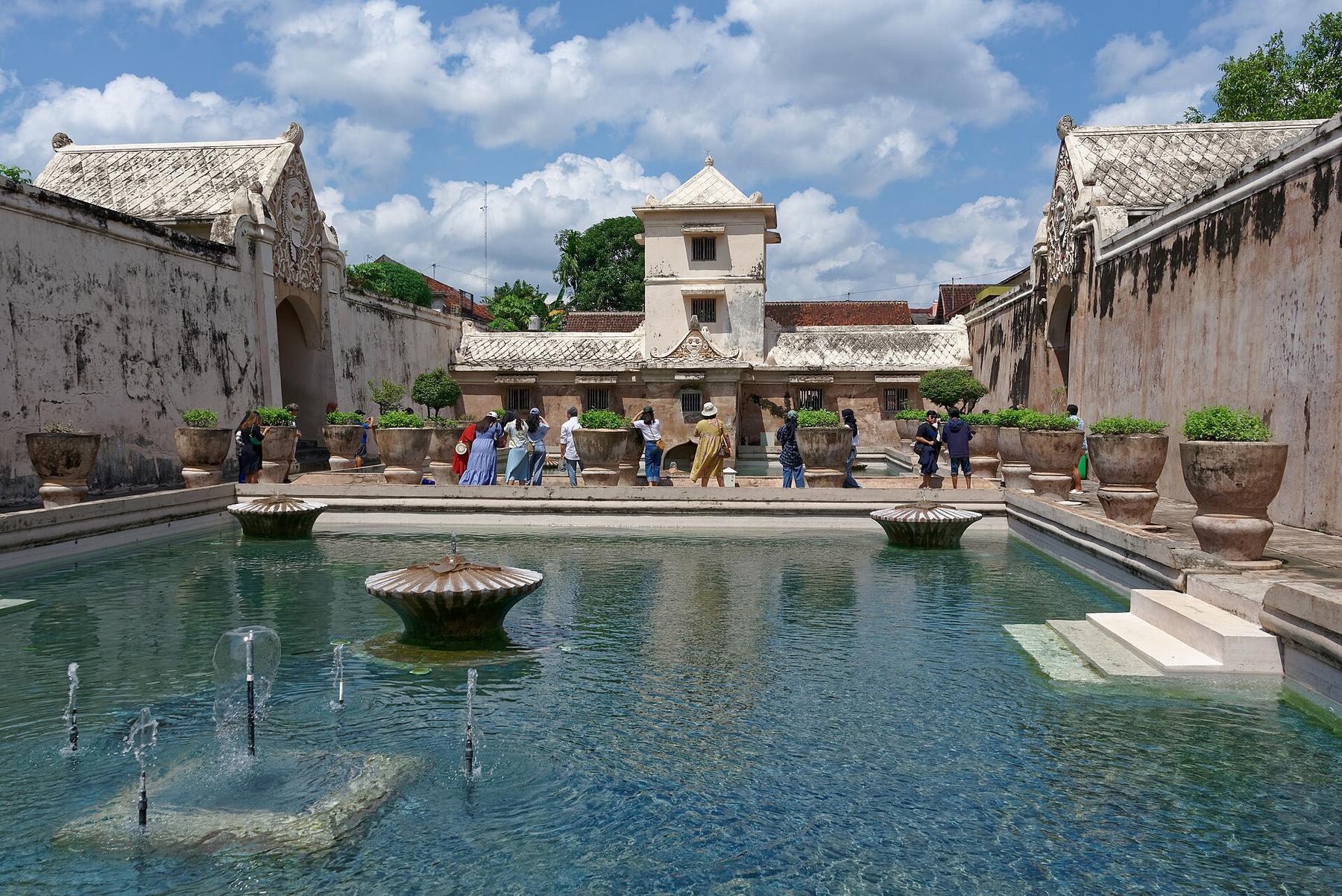
Kraton and Tamansari. The sultan's palace and the former royal pleasure garden, with narrow lanes of craft shops.
Malioboro Street. A busy shopping street with batik, snacks and street entertainers.
Silver and batik workshops. Kotagede is known for silver, and many batik studios offer short classes.
Food. Try gudeg (young jackfruit stew), bakpia (small pastries) and angkringan, small street stalls open at night.
Taman Sari's bathing pools. A quieter corner of the water castle complex, worth lingering in after the main Kraton visit rather than rushing through both in one pass.
Money and connectivity
Cards are accepted at larger hotels and restaurants, but Malioboro's street vendors, becak drivers and smaller batik shops generally expect cash. An airport eSIM or local SIM, easy to pick up on arrival, is useful for coordinating a Borobudur sunrise pickup and for maps around the city's many small lanes.
When to go
April to October is dry and good for temple visits. The wet season brings heavy rain. Cultural events and festivals occur through the year, including Sekaten, near the Prophet's birthday.
Planning notes
Book Borobudur entry ahead in busy periods. Dress modestly at temples and the palace. Respect local customs, particularly during religious events.
A loosely structured three-day plan — one day for Borobudur, one for Prambanan and the Ratu Boko sunset, and one for the Kraton, Malioboro and a craft workshop — covers the city's main draws without feeling rushed.
Opens Klook in a new tab to complete your booking.
How many days do I need in Yogyakarta?
Three days is enough for Borobudur, Prambanan, the palace and food. Add one day for Merapi or caves.
Is Borobudur worth the early start?
Sunrise tours offer a special atmosphere, but daytime visits are quieter in some seasons. Check current rules.
How do I get to Borobudur?
By car, tour or bus, about an hour from the city.
Is Yogyakarta good for budget travel?
Yes. Lodging, food and activities are generally affordable.
Can I visit both Borobudur and Prambanan in one day?
It's possible but tiring, since they're in opposite directions from the city; most visitors find splitting them across two days more comfortable.