
Osaka
On this page
Osaka is Japan's loudest, friendliest food city. Locals have a reputation for blunt humor and big appetites, and the saying kuidaore, "eat until you drop", is the city's unofficial motto. It is also one of the best bases in Japan, with Kyoto, Nara and Kobe all within about an hour by train. A trip here works best when you treat the city as both a destination and a hub.
Visitors coming straight from Tokyo often notice the shift immediately: shopkeepers chat more, street food is eaten standing up rather than seated, and the whole city feels tuned for appetite over formality.
At a glance
- Best for: street food, nightlife, castle and canal scenes, and day trips.
- How long: two to three days in the city, more if you use it as a base for Kyoto and Nara.
- Getting around: subway and the JR Loop Line. An IC card works across all of it.
- Vibe: casual, talkative, less formal than Tokyo.
- Good to know: many visitors use Osaka as a base even if they plan more days in Kyoto.
The two Osakas
The city splits into two main halves.
- Kita (Umeda) is the northern business and shopping hub. Big stations, department stores, rooftop views and a more polished feel.
- Minami (Namba and Dotonbori) is the southern entertainment zone. Neon signs, canal-side food stalls, arcades and the covered shopping streets that tourists associate with Osaka.
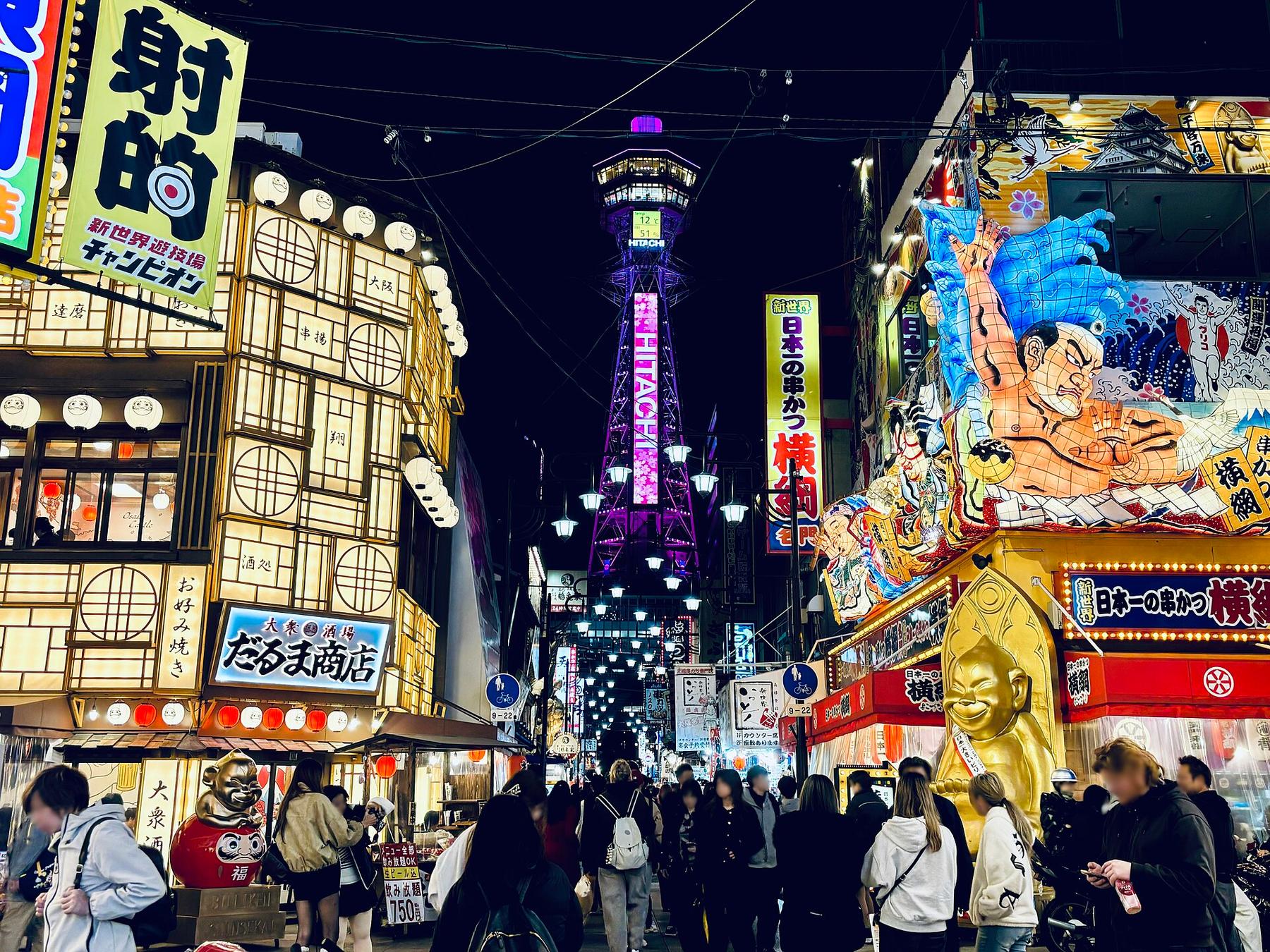
Between and around them you find Osaka Castle to the east, the Shinsekai district with its retro tower to the south, and the bay area with an aquarium and theme park.
Kita and Minami are close enough by subway that choosing a hotel in one doesn't meaningfully cut you off from the other; the choice is really about which late-night feel you want outside your front door.
Highlights worth your time
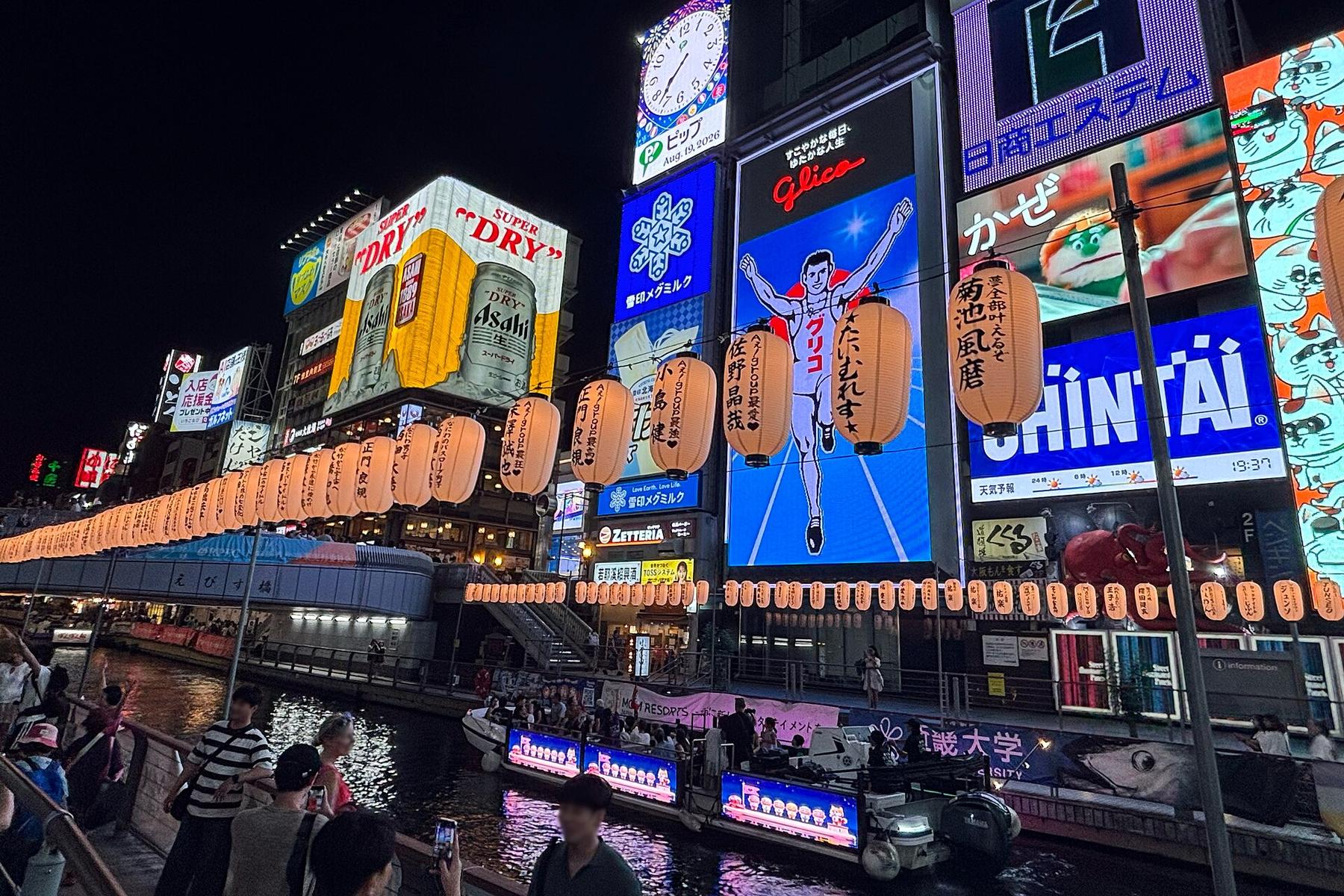
Dotonbori after dark. The canal lit by oversized signs is a spectacle. Eat takoyaki (octopus balls) and okonomiyaki (savory pancakes) nearby, and walk the side streets for smaller shops with shorter queues.
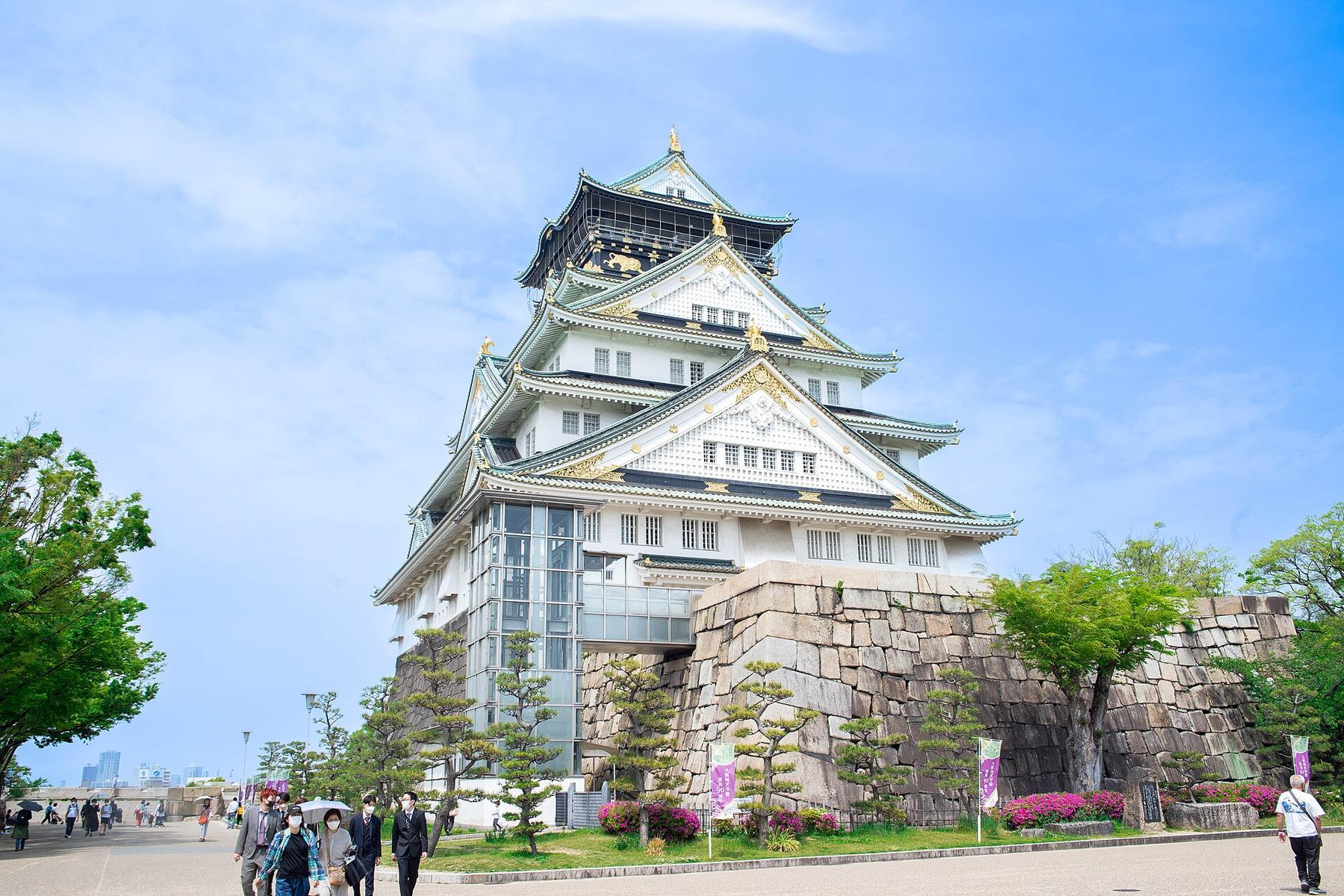
Osaka Castle. A reconstructed castle in a large park. The park and moat are the best part, and cherry blossom season brings a lot of visitors.
Kuromon Market. A covered market with fresh seafood, skewers and snacks. Go in late morning, and arrive hungry.
Shinsekai. A retro neighborhood with fried skewers (kushikatsu) and an old-fashioned feel. A good evening stop.
Day trips. Kyoto takes under an hour. Nara, with its deer park and giant Buddha, is about the same. Kobe offers port views and a different mood. Himeji's white castle is a short rapid train beyond.
Hozenji Yokocho. A narrow lantern-lit lane tucked just off the Dotonbori crowds, with a small moss-covered temple and a noticeably quieter mood within a minute's walk of the main strip.
Opens Trip.com in a new tab to complete your booking.
Money and connectivity
An IC card covers subway, JR lines and most buses, and is worth loading at the airport before heading into the city. Mobile data through an airport eSIM or a pocket Wi-Fi rental is easy to arrange and useful for navigating Osaka's sometimes confusing station layouts.
Where to eat
Osaka rewards standing, queuing and ordering by pointing. Look for shops that do one thing well: takoyaki, okonomiyaki, kushikatsu, udon, yakiniku. Common etiquette: do not double-dip kushikatsu in the shared sauce. Choose lunch sets for better value. For a calm meal, try restaurants in the basements of large stations, where quality is consistent.
A shop with a short, specific menu and a line of locals outside is usually a better sign than a larger restaurant with photos of every dish on a laminated board.
When to go
Spring and autumn are the best seasons, with mild weather and seasonal color. Summers are hot and humid. Winters are cooler but rarely severe. Plan carefully around Golden Week and cherry blossom peaks, when everything fills up.
Planning notes
Use Osaka as a base for Kyoto and Nara if you want lively evenings after quiet days. Namba and Umeda both connect directly to most trains. Avoid cramming too many places into a single day. The city's real pleasure is the evening.
Opens Klook in a new tab to complete your booking.
Is Osaka better than Tokyo for food?
They are different. Osaka is known for casual, hearty street food and local specialties. Tokyo has more range at the high end. Many travelers visit both.
Can I stay in Osaka and visit Kyoto?
Yes, and many do. Trains take about 30 to 50 minutes depending on the line, and you can return for dinner in Osaka.
Which area is best for first-time visitors?
Namba suits food and nightlife. Umeda suits transit and a quieter feel. Both are fine for sightseeing.
How many days should I spend in Osaka?
Two or three days cover the city. Add more if you plan day trips to Nara, Kobe or Himeji.
Is Osaka a good base for exploring western Japan?
Yes. Kyoto, Nara, Kobe and Himeji are all within about an hour, making Osaka a practical single base for a multi-day western Japan itinerary.