
Bali
On this page
Bali is a small island with a big range: surf beaches and clifftop temples, rice terraces and jungle waterfalls, beach clubs, yoga studios and daily offerings left on every doorstep. Most of the island's rich Hindu culture lives on in ceremonies, dance and craft. The key to a good trip is choosing the right bases, because traffic makes it slow to cross the island in a day.
Visitors who try to see the whole island from one hotel often end up frustrated by traffic; splitting a stay across two or three areas, even for just a few nights each, usually produces a far better trip than one long stay in a single location.
At a glance
- Best for: beaches, surfing, culture, wellness, food and slow travel.
- How long: five to seven days, split across two or three bases.
- Getting around: private drivers, ride-hailing apps in some areas, and scooters for experienced riders. Traffic is heavy in the south.
- Seasons: the dry season (April to October) is the most popular. The wet season brings rain and fewer crowds.
- Good to know: distances are short on the map and slow on the road.
The main areas
- Seminyak, Kuta and Legian: the busy south, with beach clubs, shopping and nightlife. Kuta is lively and budget-friendly, while Seminyak is more upscale.
- Canggu: a surf and café scene, popular with digital nomads. Rice fields mix with trendy restaurants.
- Uluwatu and the Bukit Peninsula: clifftop views, surf breaks and sunset temples.
- Ubud: the cultural heart, set among rice terraces and forests, with art, dance and yoga.
- Sanur: a calmer beach town, popular with families.
- Nusa Dua: manicured resorts and calm water.
- East and North: quieter coasts with Amed's diving, and the north's waterfalls and lakes.
- Nusa Penida and Nusa Lembongan: nearby islands for cliffs and snorkeling.
A common and effective pattern is a few nights in the south (Seminyak or Canggu) for beach and food, followed by a few nights in Ubud for culture and nature, since the drive between them is manageable as a single transfer rather than a daily commute.
Highlights worth your time
Rice terraces. Tegallalang is famous, but quieter ones sit near Sidemen and Jatiluwih, a UNESCO-listed site.

Temples. Tanah Lot and Uluwatu sit on sea cliffs. Besakih is the island's largest. Wear a sarong and respect local rules.
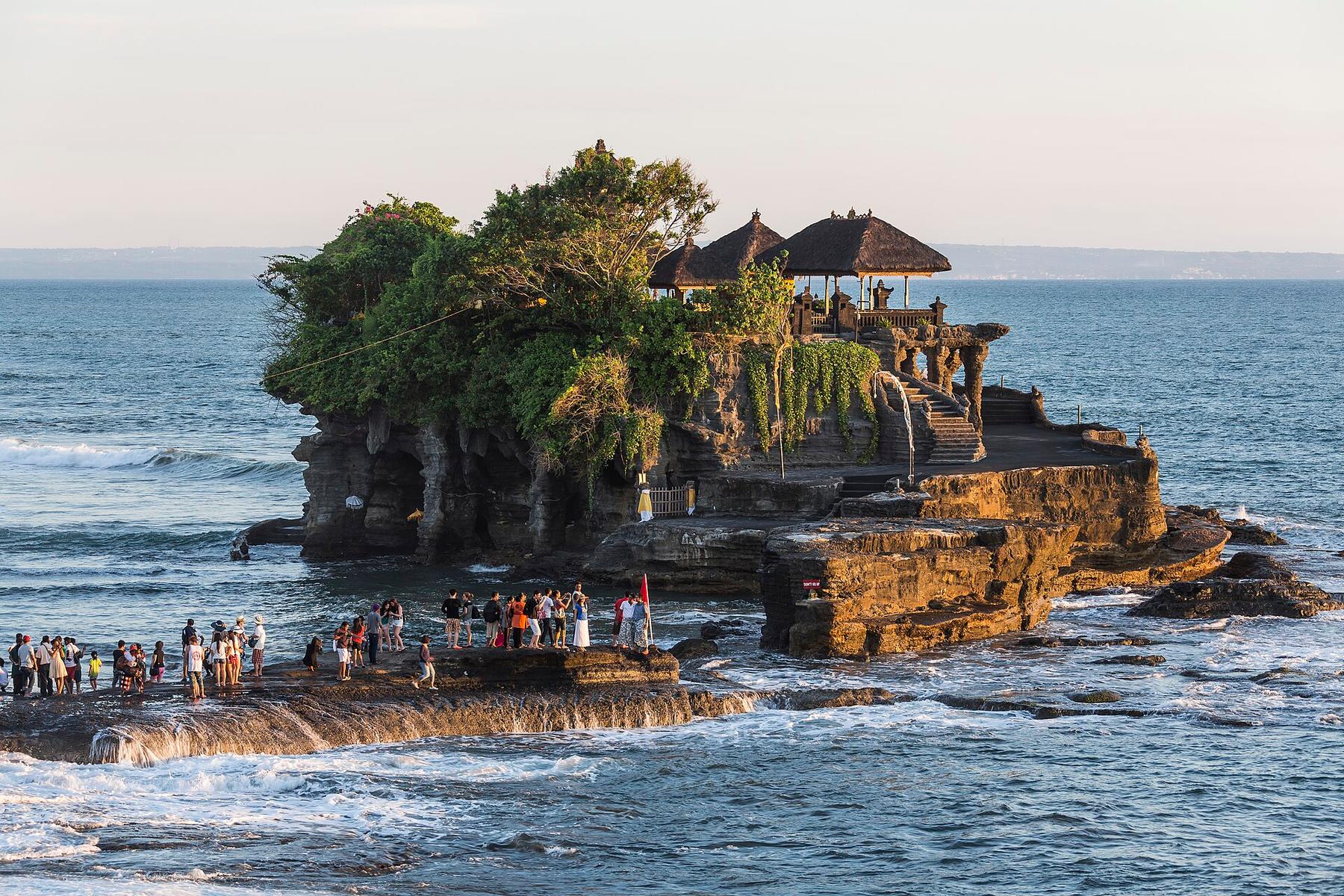
Beaches and surfing. Choose a beach to match your skill and mood. Strong currents are common, so heed lifeguards and flags.
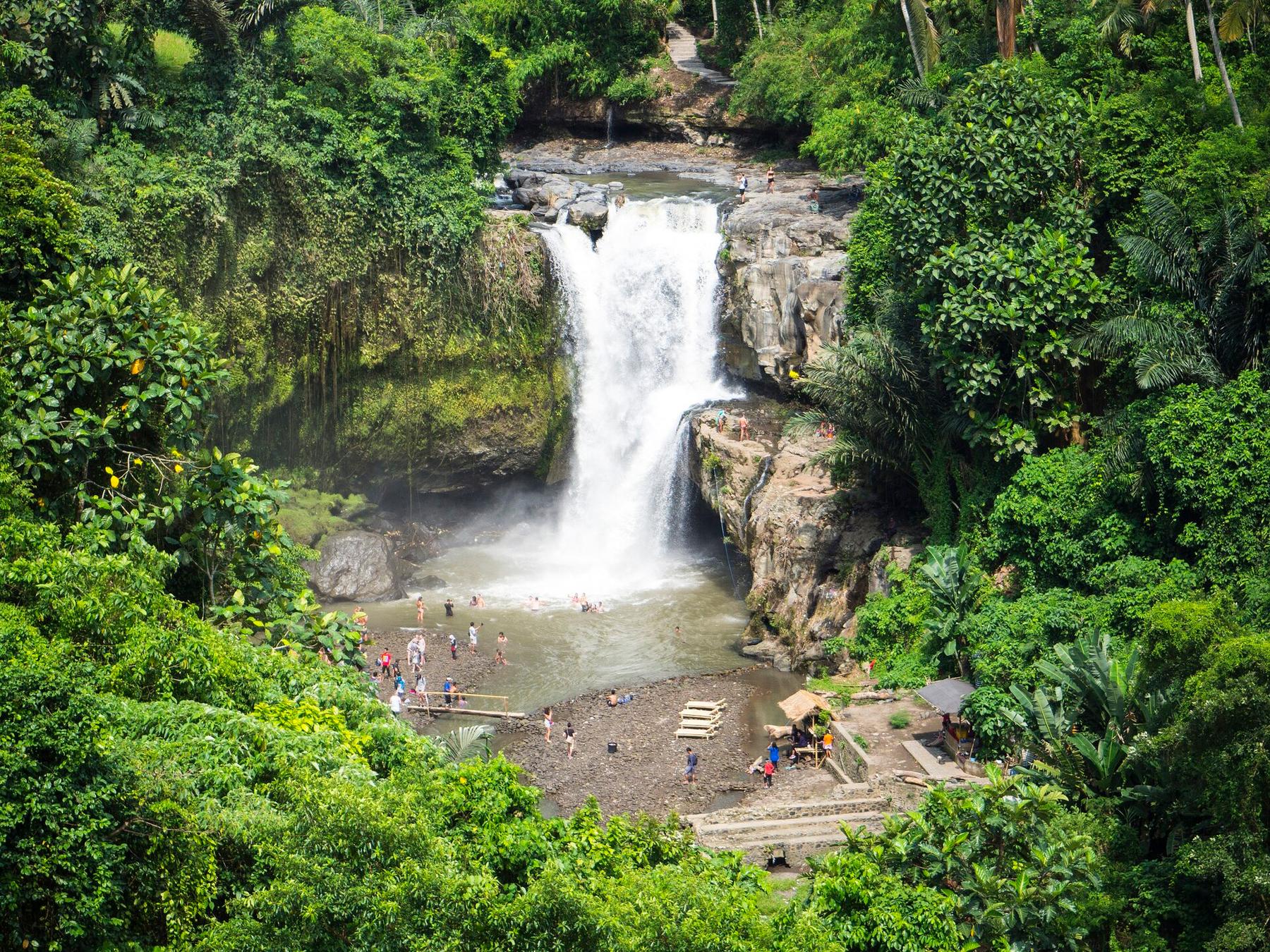
Waterfalls. Many lie in the north and center. Wear shoes with grip.
Food and drink. Warungs serve nasi campur and babi guling (suckling pig). Cafés and beach clubs cater to all budgets.
Canggu's rice-field cafés. A newer draw alongside the surf scene: cafés and restaurants built right up against working rice paddies, a striking contrast to the beach clubs a short ride away.
Money and connectivity
Cards are accepted at larger hotels, beach clubs and restaurants in the south, but warungs and smaller shops generally expect cash. An airport eSIM or a local prepaid SIM is worth arranging on arrival, both for navigation and for keeping in touch with drivers if you're hiring one by the day.
Respectful travel
Bali is a living religious culture. Dress modestly at temples, never step on offerings, and be cautious with photography at ceremonies. Respect local rules and the environment.
When to go
April to October is the dry season, with sunshine and less humidity. July and August, and the December holiday period, are peak times. The wet season runs roughly November to March, with afternoon downpours.
Traffic and pacing
The island's roads, especially in the south, can turn a short-looking drive into a much longer one at peak times. Building a buffer around any fixed plan, such as a sunset temple visit or a dinner reservation, and accepting that Ubud to the coast is a real journey rather than a quick hop, keeps a multi-base itinerary from feeling rushed.
Opens Klook in a new tab to complete your booking.
How many days do I need in Bali?
Five to seven days works for two bases, such as Ubud and the coast. Ten days lets you add the Nusa islands or the north.
Where should I stay on my first visit?
Seminyak suits those who want beach and dining. Ubud suits culture and nature. Many people split their stay between them.
Is it safe to rent a scooter?
Only if you are experienced and hold the right license and insurance. Traffic is chaotic, and accidents are common.
When is the best time to visit?
April to October for dry weather, with shoulder months like May and September less crowded.
Is a private driver worth hiring for a day?
Often yes, especially for temple and rice-terrace circuits outside the main towns, since it removes the need to navigate or negotiate transport on the spot.